

OSHA Decibel Levels - Hearing Protection Determining the need to provide hearing protection for employees can be challenging. Employee exposure to excessive noise depends upon a number of factors, including: · The loudness of the noise as measured in decibels (dB) · The duration of each employee’s exposure to the noise · Whether employees move between work areas with different noise levels (decibel levels) · Whether noise is generated from one or multiple sources Generally, the louder the noise, the shorter the exposure time before hearing protection is required. For instance, employees may be exposed to a noise level of 90 dB for 8 hours per day (unless they experience a Standard Threshold Shift) before hearing protection is required. On the other hand, if the noise level reaches 115 dB hearing protection is required if the anticipated exposure exceeds 15 minutes. For a more detailed discussion of the requirements for a com-prehensile hearing conservation program, see OSHA Publication3074 (2002), “Hearing Conservation” or refer to the OSHA standard at 29 CFR 1910.95, Occupational Noise Exposure, section (c). The table, below, shows the permissible noise exposures that require hearing protection for employees exposed to occupational noise at specific decibel levels for specific time periods. Noises are considered continuous if the interval between occurrences of the maximum noise level is one second or less. Noises not meeting this definition are considered impact or impulse noises (loud momentary explosions of sound) and exposures to this type of noise must not exceed 140 dB. Examples of situations or tools that may result in impact or impulse noises are powder-actuated nail guns, a punch press or drop hammers.
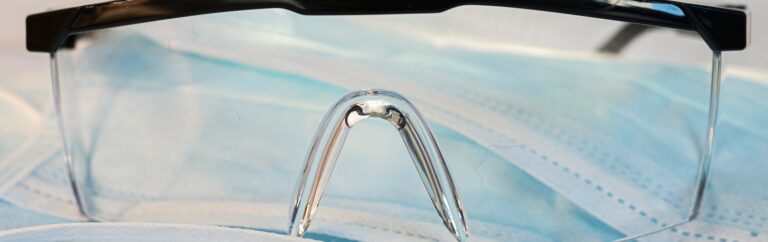
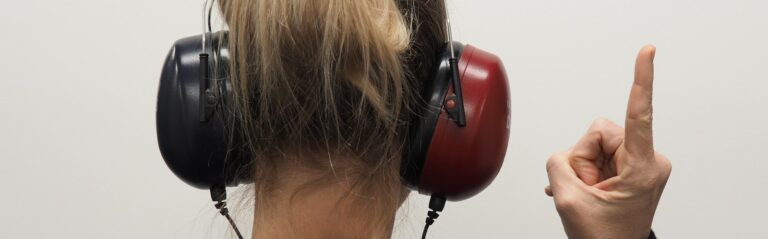
Permissible Noise Exposures | Duration per day, in hours | Sound level in dB* - Decibel level | 8 | 90 | 6 | 92 | 4 | 95 | 3 | 97 | 2 | 100 | 1.5 | 102 | 1 | 105 | 0.5 | 110 | 0.25 or less | 115 | *When measured on the A scale of a standard sound level meter at slow response. Source: 29 CFR 1910.95, Table G-16. If engineering and work practice controls do not lower employee exposure to workplace noise to acceptable decibel levels, employees must wear appropriate hearing protection. It is important to understand that hearing protectors reduce only the amount of noise that gets through to the ears. The amount of this reduction is referred to as attenuation, which differs according to the type of hearing protection used and how well it fits. Hearing protectors worn by employees must reduce an employee’s noise exposure to within the acceptable limits noted in the above table. Refer to Appendix B of 29 CFR1910.95, Occupational Noise Exposure, for detailed information on methods to estimate the attenuation effectiveness of hearing protectors based on the device’s noise reduction rating (NRR).Manufacturers of hearing protection devices must display the device’s NRR on the product packaging. If employees are exposed to occupational noise at or above 85 dB averaged over an eight-hour period, the employer is required to institute a hearing conservation program that includes regular testing of employees’ hearing by qualified professionals. Refer to 29 CFR 1910.95(c) for adscription of the requirements for a hearing conservation program. Some types of hearing protection include: · Single-use earplugs are made of waxed cotton, foam, silicone rubber or fiberglass wool. They are self-forming and, when properly inserted, they work as well as most molded earplugs. · Pre-formed or molded earplugs must be individually fitted by professional and can be disposable or reusable. Reusable plugs should be cleaned after each use. · Earmuffs require a perfect seal around the ear. Glasses, facial hair, long hair or facial movements such as chewing may reduce the protective value of earmuffs. Exposure to loud noise is the second most common cause of hearing loss. Approximately 30 million Americans are exposed to high intensity noise in their workplace (1,2) in one in 4 of these workers (or 7.5 million Americans) a permanent hearing loss will develop (1,2). Much can be done to prevent noise-induced hearing loss but little can be done to reverse it. Sometimes a single exposure to loud noise is all that is needed, a single hunting trip without ear plugs. Loud noise damages the hair cells in the inner ear and can cause hearing loss, ear ringing and distortion of sounds. 1) Franks JR, Stephenson MR, Merry CJ. Preventing occupational hearing loss. A practical guide. DHSS (HIOSH) pub. No. 96-110. Available at: http://www.cdc.gov/niosh/96-110.html Accessed November 7, 2004. 2) National Institute of Deafness and Other Communicative Disorders: Noise Induced Hearing Loss. Available at: http://www.nidcd.nih.gov/health/hearing/noise.asp Accessed November 7, 2004. The symptoms of noise induced hearing loss are subtle in the early stages. Hearing loss tends to occur first for high-pitched sounds only. Consequently, the volume of sound heard may be unchanged but the quality of it lessens. Speech may be heard but not completely understood. The presence of background noise can make speech hard to understand. Noise induced hearing loss has been reported to be accompanied by a ringing in the ears (tinnitus) in 23% of subjects (Phoon, 1993). Tinnitus can often be more annoying than the hearing loss itself. Treatment of tinnitus is often unsatisfactory. There has been an association between acoustic trauma (noise induced hearing loss) and Meniere's disease which has been reported in the a few research articles and text books. Decibel Levels of Environmental SoundsSource--Dangerous Level | dBA SPL | Produces Pain | 120-140 | Jet Aircraft During Takeoff (at 20 meters) | 130 | Snowmobile Tractor Without Cab | 120 | Rock Concert | 110 | Die Forging Hammer Gas Weed-Whacker Chain Saw Pneumatic Drill | 100-105 | Home Lawn Mowers | 95 to 100 dB | Semi-trailers (at 20 meters) | 90 | Source-- | dBA SPL | Discomfort Level | Above 80 | Heavy Traffic | 80 | Automobile (at 20 meters) | 70 | Vacuum Cleaner | 65 | Conversational Speech (at 1 meter) | 60 | Quiet Business Office | 50 | Residential Area at Night | 40 | Whisper, Rustle of Leaves | 20 | Rustle of Leaves | 10 | Threshold of Audibility | 0 |
Dangerous Noises
Physical measurements of the sound can be make to determine whether it exceeds dangerous levels, and most factories have access to the necessary equipment. Radio Shack also sells a sound level meter for under $40 which will measure noise levels using the "A" Scale. (This is what the designation dBA refers to -- decibels measured in the A Scale.) However, without noise-measuring equipment, the following basic rules can be followed: · If it is necessary to shout to hear yourself over a noise, the level of the sound can be damaging. · Should ringing in the ears occur after exposure to a loud sound, damage has been done and that sound should be avoided or ear protection used in the future. · If diminished hearing or a sense of fullness in the ears is experienced after noise exposure, the level of that noise is damaging.
|